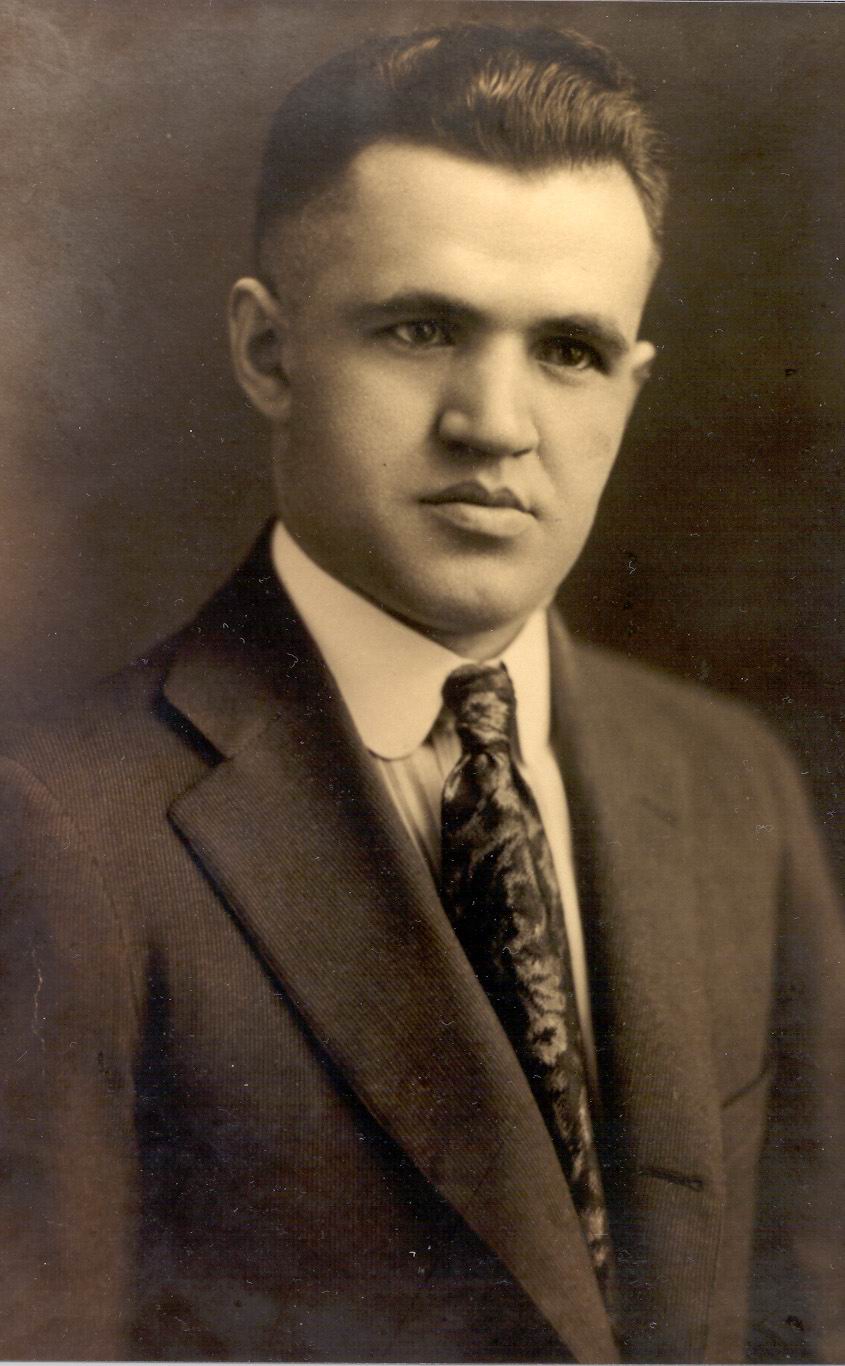
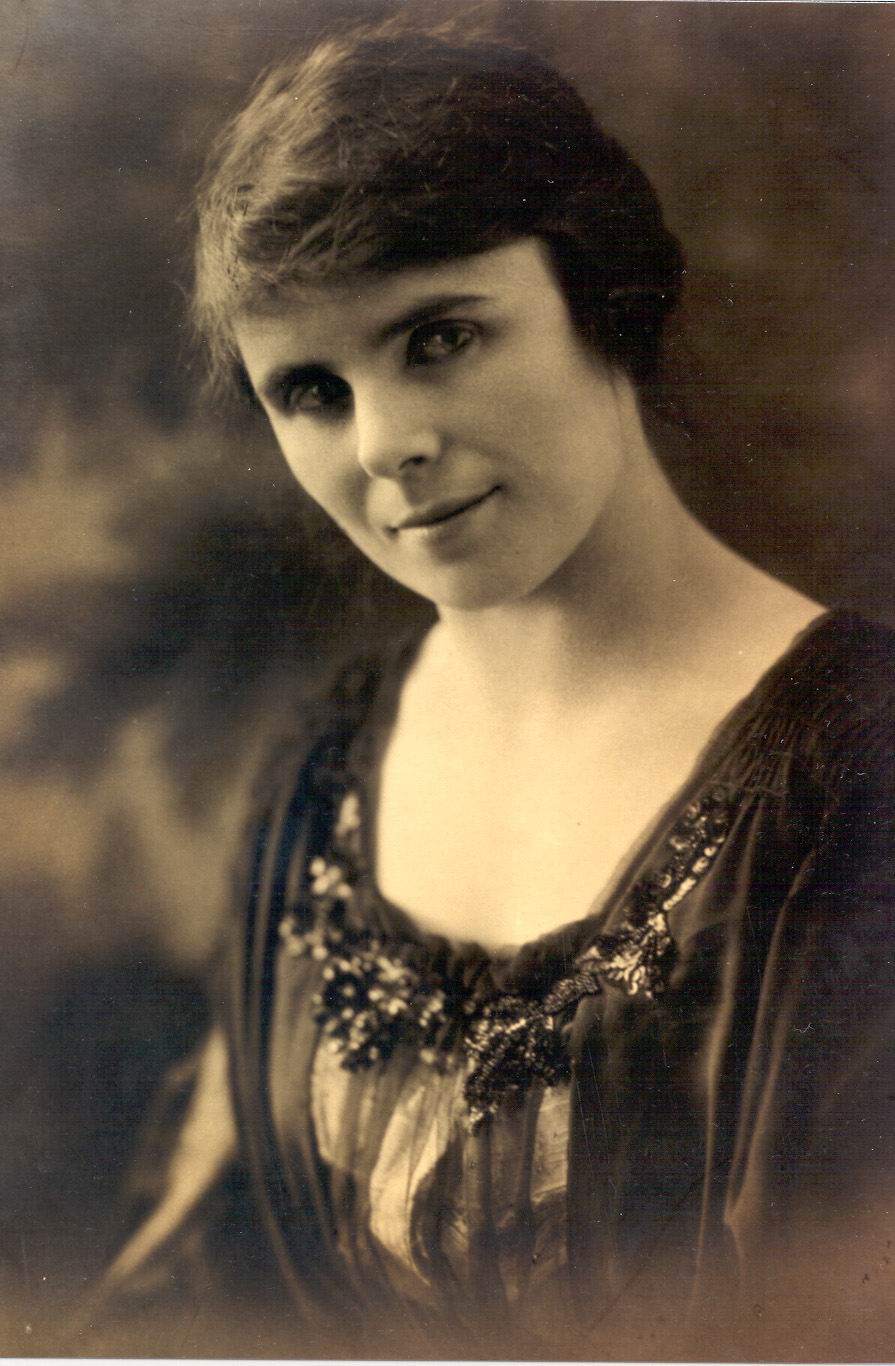
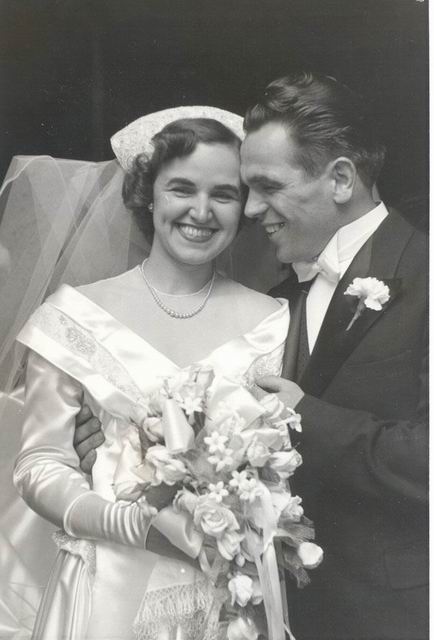
Eulogy of Teodor Jaremus
We are gathered
here today to lay to rest, Teodor Jaremus, a man whose life should be
remembered for it’s toughness, for his adaptability and frugality, for his
love of life and love of his family and friends, and his concern for those
less fortunate than him.
Let me tell you a little bit about
Ted, the boy.
Teodor Jaremus was born February 5th,
1923, the second child of Polish migrant farm laborers. He was born in
Gryfice, Germany, where his father was picking potatoes. A few years
later, the family moved back to Poland and settled down in the new port city
of Gdynia. The family had a tough life. In the early years, his
parents had a boarding house on the harbor. But when the city decided
to expand the harbor, they condemned the homes in the area for business
expansion giving the Jaremus’ an empty suburban lot in exchange. His
father was a political labor activist and a drinker, whose tough style and
altercations got him thrown into prison. When Ted’s father came home
from working on a ship, somehow he had little to show for it. As
a child, it was rare to have meat on the table, and a pair of holey shoes
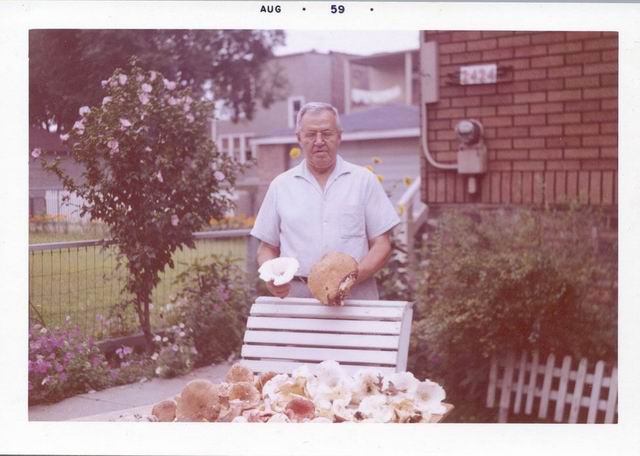
had to last for years. Ted’s parents took the kids into the woods
where they would gather mushrooms to supplement their meals.
In September 1939 when WWII broke
out, Ted was 15-1/2 years old. As the Germans took control of Poland,
many Poles were recruited as “Volk-deutsch”, non-German conscripts that were
offered an easier way their families. Ted was one of only a few Poles
from the area that refused to fight for the Germans. He was publicly
beaten up by the Germans to humiliate him for his defiance. Most of
the Polish Volk-deutsch were sent to the Russian front lines where they were
the first to die. At this young age, Ted was shipped off as a slave
laborer, while his mother and sister were put into a concentration camp.
They lived to see another day.
Let me tell you about Ted, the young
man.
While working in the coal mines in
Verdun, France, he came up to the surface for a break and pulled a bit of
straw from the hut at the entrance to the mine, to chew on. The German
guard, thinking he was trying to shake the hut and signal the overhead US
bombers – drew his gun on Ted and prepared to shoot him. He pleaded in
French as best he could that he didn’t know about the bombers, which he
hadn’t. Somehow he went on to see another day.
Later that year, there was a partial
mine collapse and timbers fell on him breaking his collarbone and leg.
Somehow he survived another day.
Ted had a talent for
language. In the prison camp, he managed to pick up enough German and
French to become the language translator for the Germans to their Polish and
French laborers. While in the labor camp, one of his friends was being
beaten by a German officer. Ted suggested to the officer that he “pick
on someone his own size”. While Ted wasn’t exactly his size, he was a
tough young man. He beat up the officer so
bad, he knocked one eye out. Ted was put into solitary confinement for
30 days with only bread and water, from which he almost died. But
somehow he survived another day.
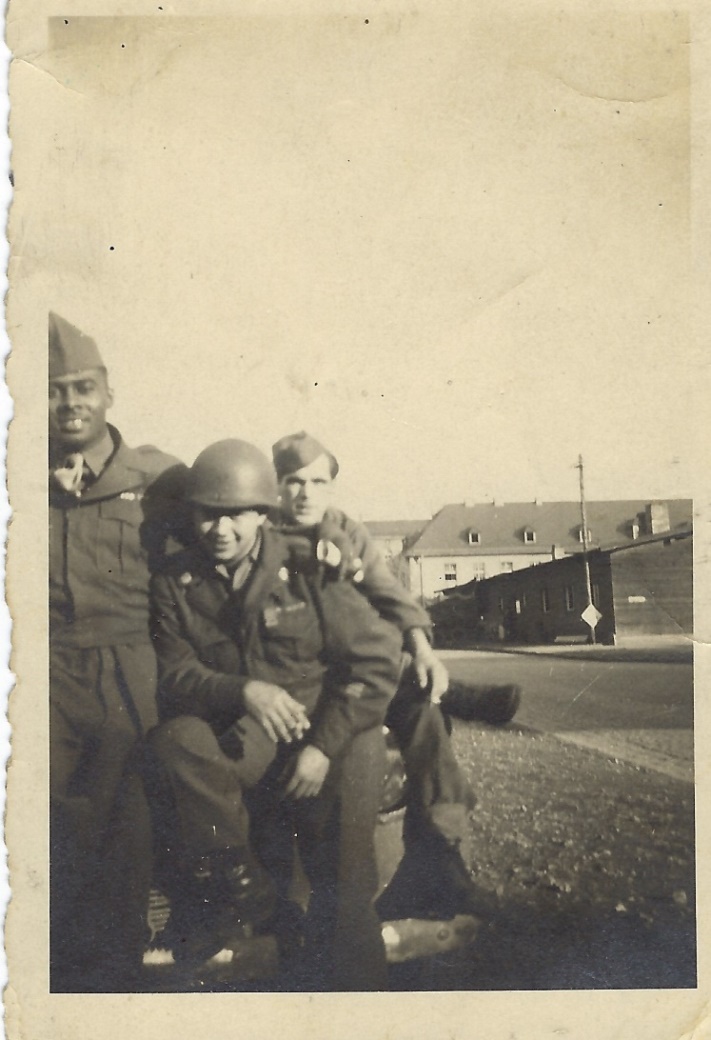
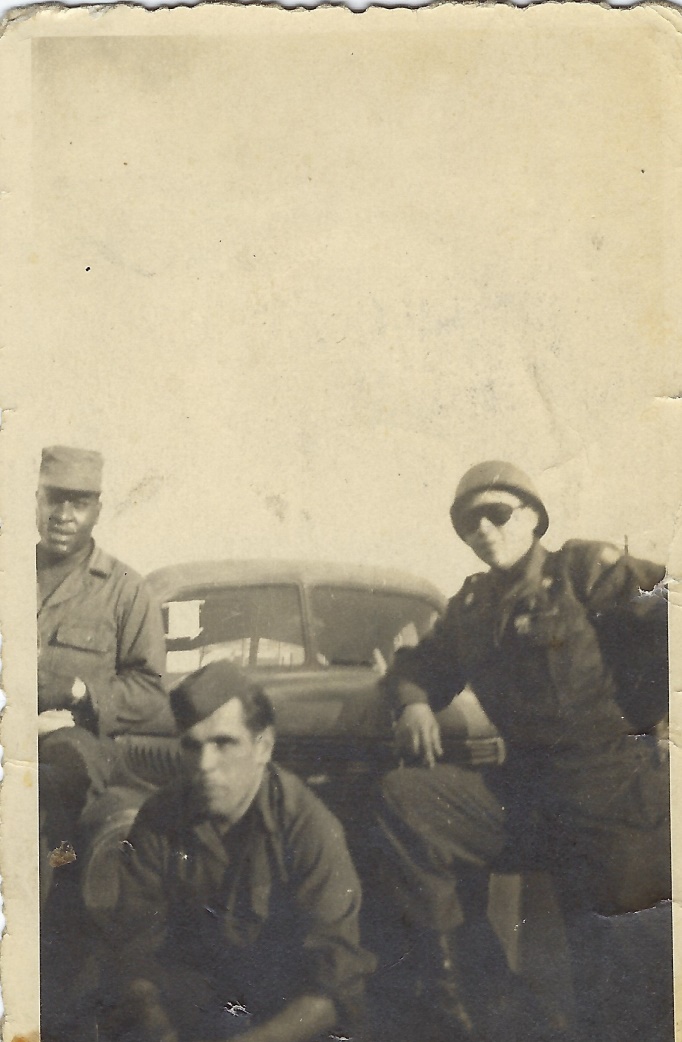
When the American army came through
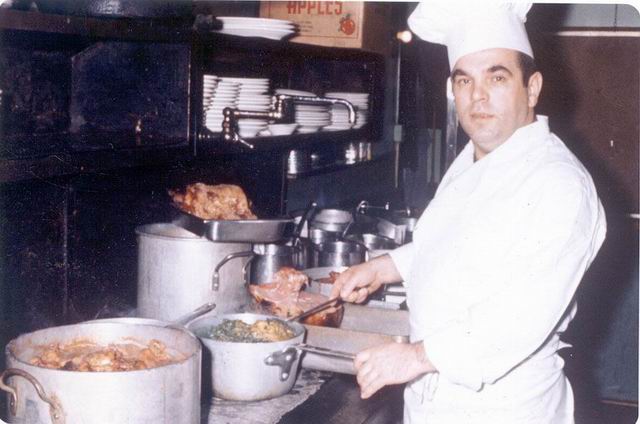
Verdun in 1944 he joined up and served as a munitions laborer and as a cook.
He gained a great appreciation for the American soldiers who seemed to
possess an openness and strength of character that he hadn’t experienced.
He took pride in cooking a good meal for the American’s. The camp
commander publicly singled him out for his cooking efforts. This was
the beginning of his cooking career.
After the war he went back home to
Gdynia, Poland, where he obtained training in the culinary arts. He
became a cook, working on a ship from that seaport. In 1948 he took
advantage of shore leave in Galveston, Texas and “jumped ship” making his
way up to Coloma, Michigan, and eventually down to Chicago, Illinois, where
he met George Gidzinski who introduced him to one of his daughters, my
mother, Eugenia. He was an illegal immigrant.
Let me tell you about Ted, the
father and provider.
While Ted was a proud Pole, a
member of St. Cyril & Methodious and later this church, and a member of the
PNA and the Polish Political League, he was also adaptable and a survivor.
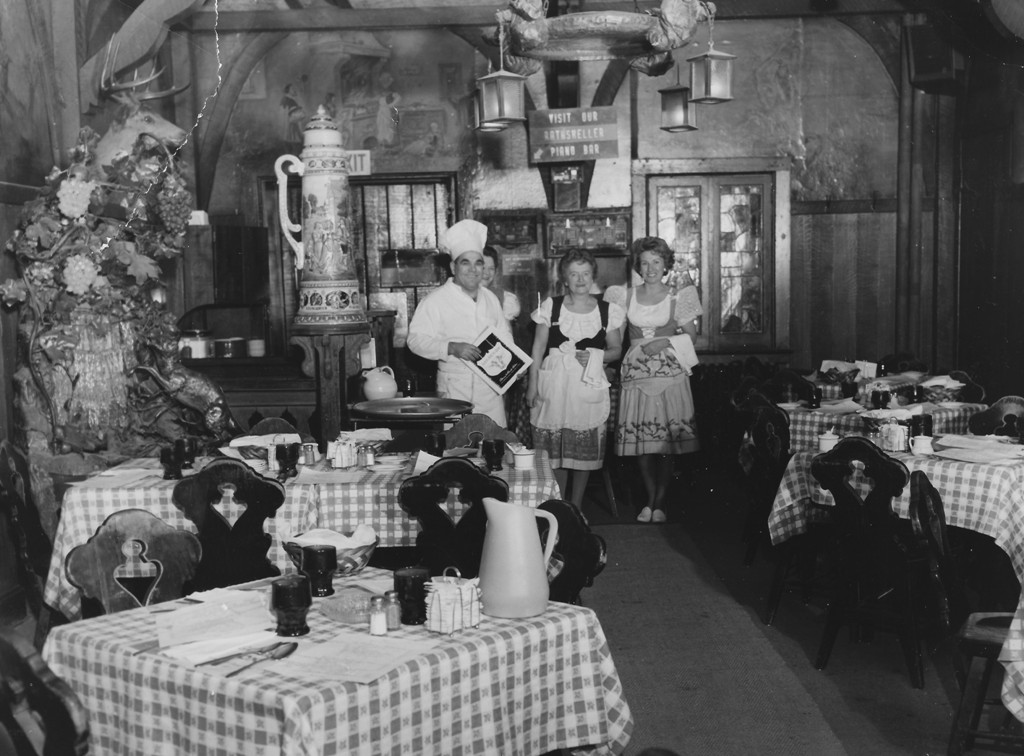
He plied not only his culinary skills, but also his hard earned language
skills into becoming the head chef of several German restaurants; the
Wishing Well, the Golden Ox, and the Red Star Inn. Why did he do it?
Because at that time in Chicago, there few Polish restaurants. So he
took his skills, saw the reality of the marketplace and used them for what
they were worth for the benefit of his family. And he gave a lot in
return. He usually working 6 and sometimes 7 days a week. But he
never complained.
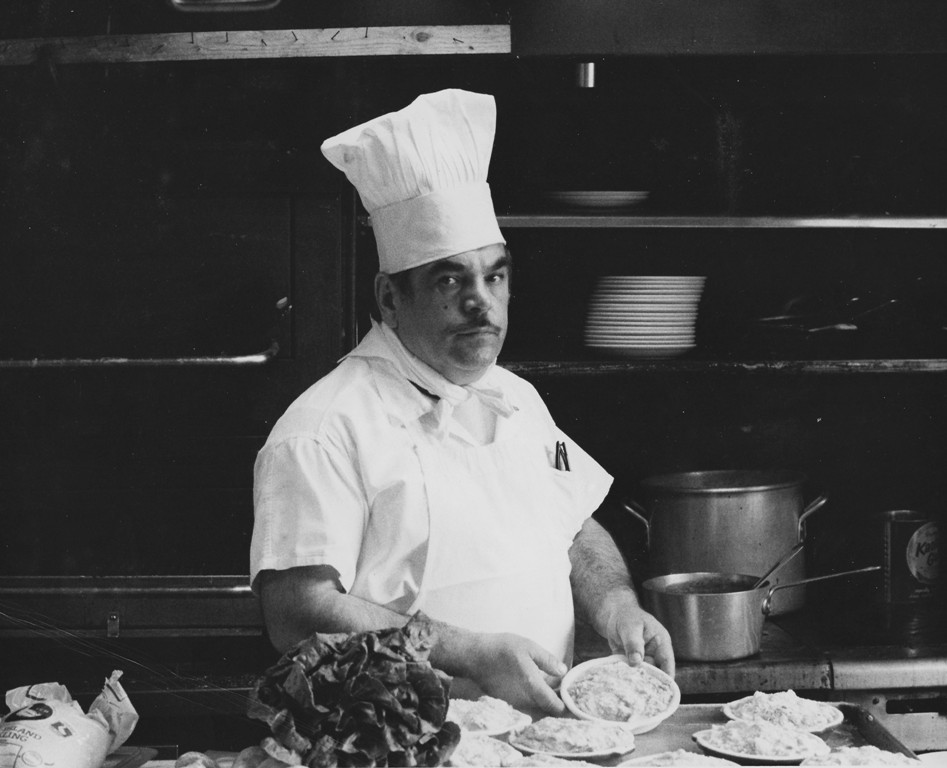
At Dohl’s Morton House he carried
the title “executive chef” but he was never an executive. He worked on
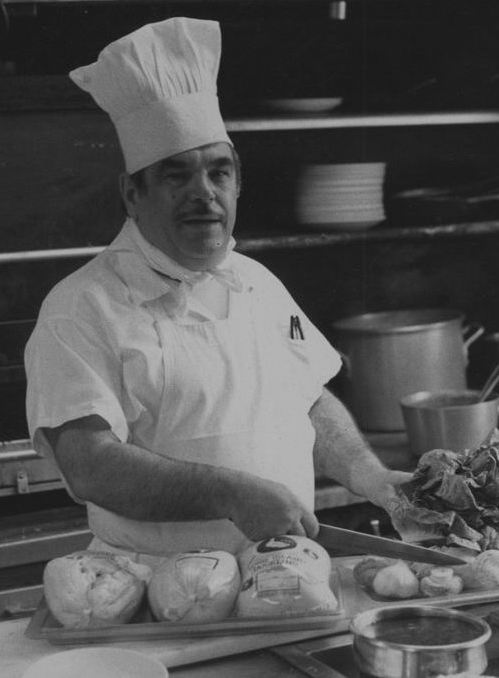
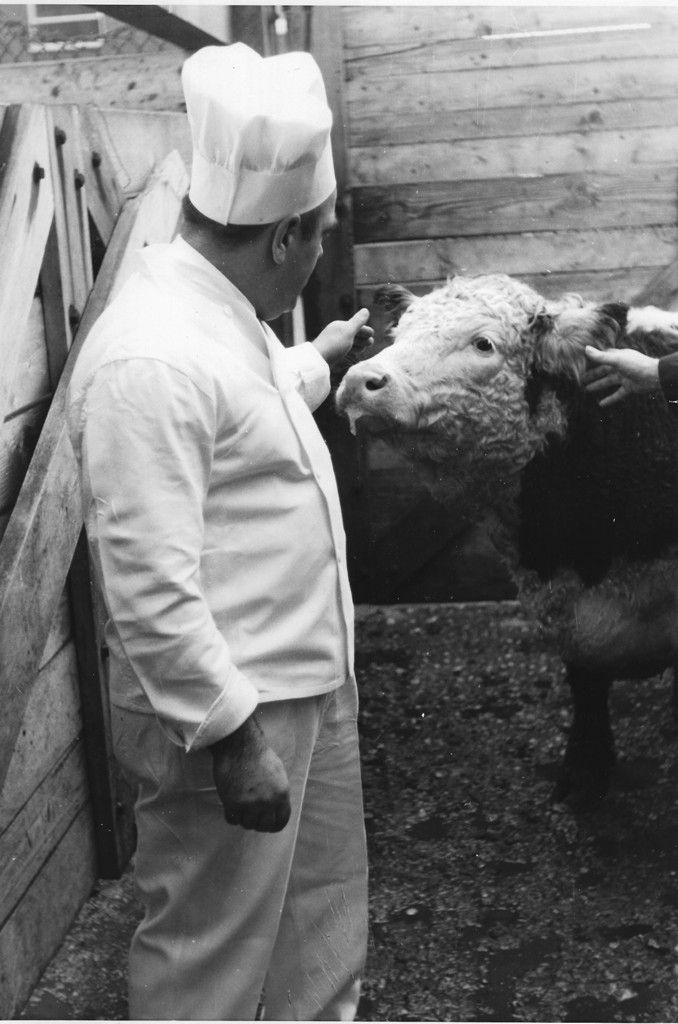
his feet all day long. If he wasn’t working behind the broiler, he
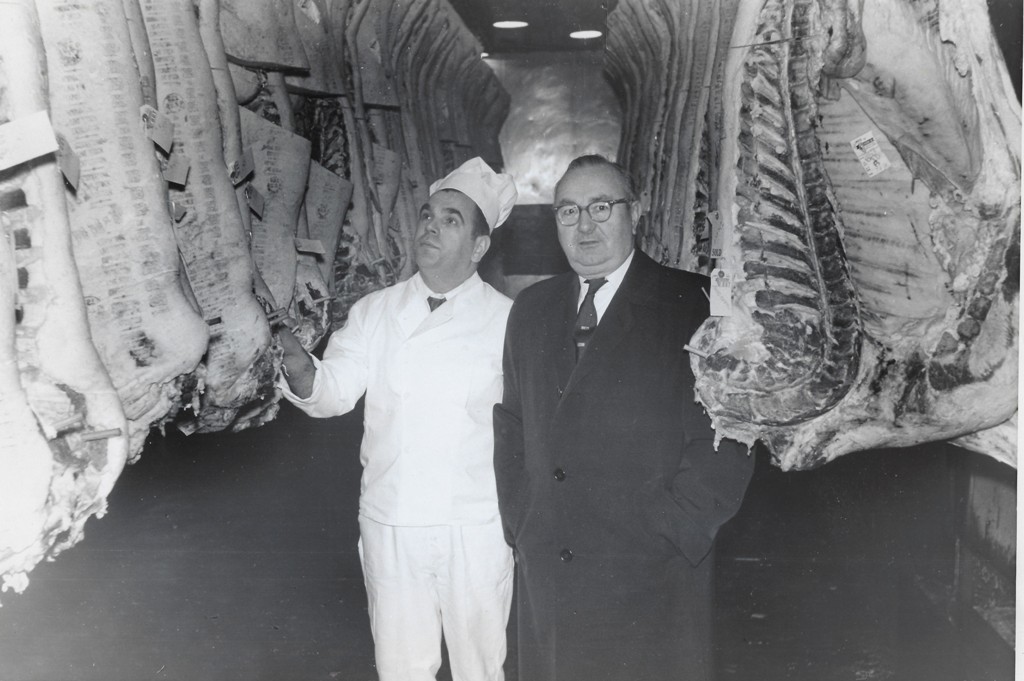
would function as butcher to save money for the restaurant. And he
loved his work and he loved making good food. Ben and I know, because
we worked there. In 1985 when the Chicago Bears won the super bowl,
and we were talking about the game and Mike Ditka, I’ll never forget dad
saying “I’d sure like to feed that guy”. He took great pleasure in
providing sustenance.
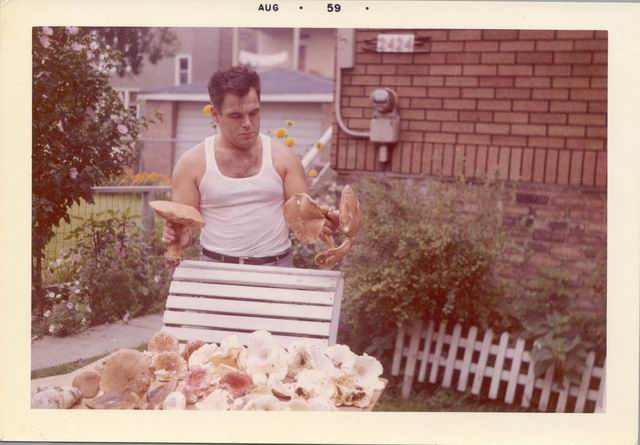
He also had a love of nature.
He loved to go walking in the woods picking mushrooms at Johnny’s house or
at the Miami woods near home. He did this because as a child, his
parents sent him to secret places in the woods to pick mushrooms so that
they would have food to eat. His life was about frugality and lack of
waste. When we were growing up, eating the food on our plate was a
rule. It was a sin not to clean your plate. You needed to eat it
all, because you never know when the enemy might be at the gate.
As
kids growing up in a suburban environment we found it hard to relate to his
strange stories from a different world. But in ’62 when we came
awfully close to having a nuclear confrontation
with the Russians over missiles in Cuba, and we were being shown in school
how to hide under our desks in case of nuclear attack and there were family
conversations about building a fall out shelter, these stories of survival
and toughness all of a sudden didn’t seem quite so crazy.
Ted had a big heart. From the
50’s through at least the 70’s while we didn’t have much, he and mom would
send care packages back to Ted’s mother and sister in communist Poland.
He opened his home to many a young Polish man trying to get his start in the
world. Mike Plewa was a good example. When Ted and I were in
Poland in 1991, we met Mike’s father who asked if there was any way his son
could come to America. Mike came and stayed with Ted off and on for 5
years. Mike was a massage therapist, and dad was glad to trade a daily
massage for room and board. Mike is now a doctor of Therapy at a
University in Poland, living a successful life. He is a life long
friend of Ted’s and mine. Ted’s generosity hasn’t been forgotten.
As my sister said the other day,
Ted had a hard time with our Throw Away Society. It was hard coming
from a family where they barely had clothes to wear seeing people throw out
so much. As we all know, he collected a lot of stuff from the
curbside. He used some of it, sold some of it, but mostly just gave it
away to whoever could use it. It was a sin to throw things away and
not use it.
Finally, Ted was a family man.
When we were living back on Kildare, I remember many times driving to The
Edgewater Beach Hotel with dad to pick up grandpa, who didn’t drive.
He worked hard to give his wife Genia a wonderful home in Morton Grove.
This wasn’t something he wanted. He wanted an apartment building, a
family house back in the city. But he bowed to mom’s wishes.
I remember how dad would put
grandpa to work Dohl’s Morton House. Grandpa was in his 70’s.
Was he taking advantage of grandpa? It sure seemed so, until I talked
with Grandpa. Grandpa appreciated the occasional work and liked to
help out. And when Grandpa came to live with mom and dad for the last
3 years of his life, it wasn’t easy. Dad and mom were running their
own business, working 12-hour days, but taking care of grandpa was also a
requirement. His actions spoke louder than words.
When mom died from that terrible
Scleroderma disease, dad did everything he could to keep mom at home.
When it came time to put mom in hospital, he practically lived at the
hospital to be by her side. Watching mom suffer like that was probably
the hardest thing my dad experienced. But it was his way to do
whatever he could.
For
his children, we have many wonderful memories of our childhood. Ted
encouraged us to succeed and did his best to provide a basis for us to do
so. When we got older, he was always there to provide a meal, a bed,
some advice and a helping hand, but mostly a lot of food and a lot of
advice. As we grew up, got married and experienced our American
success, somehow he saw that he couldn’t help us. We didn’t need the
things he found on the curbside, although his food was always a treat.
Despite Ted’s quirky ways, all of
his kids have successful marriages with families, nice homes and good jobs.
Not something that happens very often in today’s society. I’d like to
think that some of the lessons that Ted taught us made a difference in our
lives. So let us remember Ted for his courage to live, for his
strength and perseverance in the face of hardship, and for his love for his
family and care those less fortunate than him, a life that Jesus Christ
would, I think, be proud of.
By his son, Rolfe Jaremus
Written December 24,
2005
=================================================================================
The Gavet -
Jaremus Connection
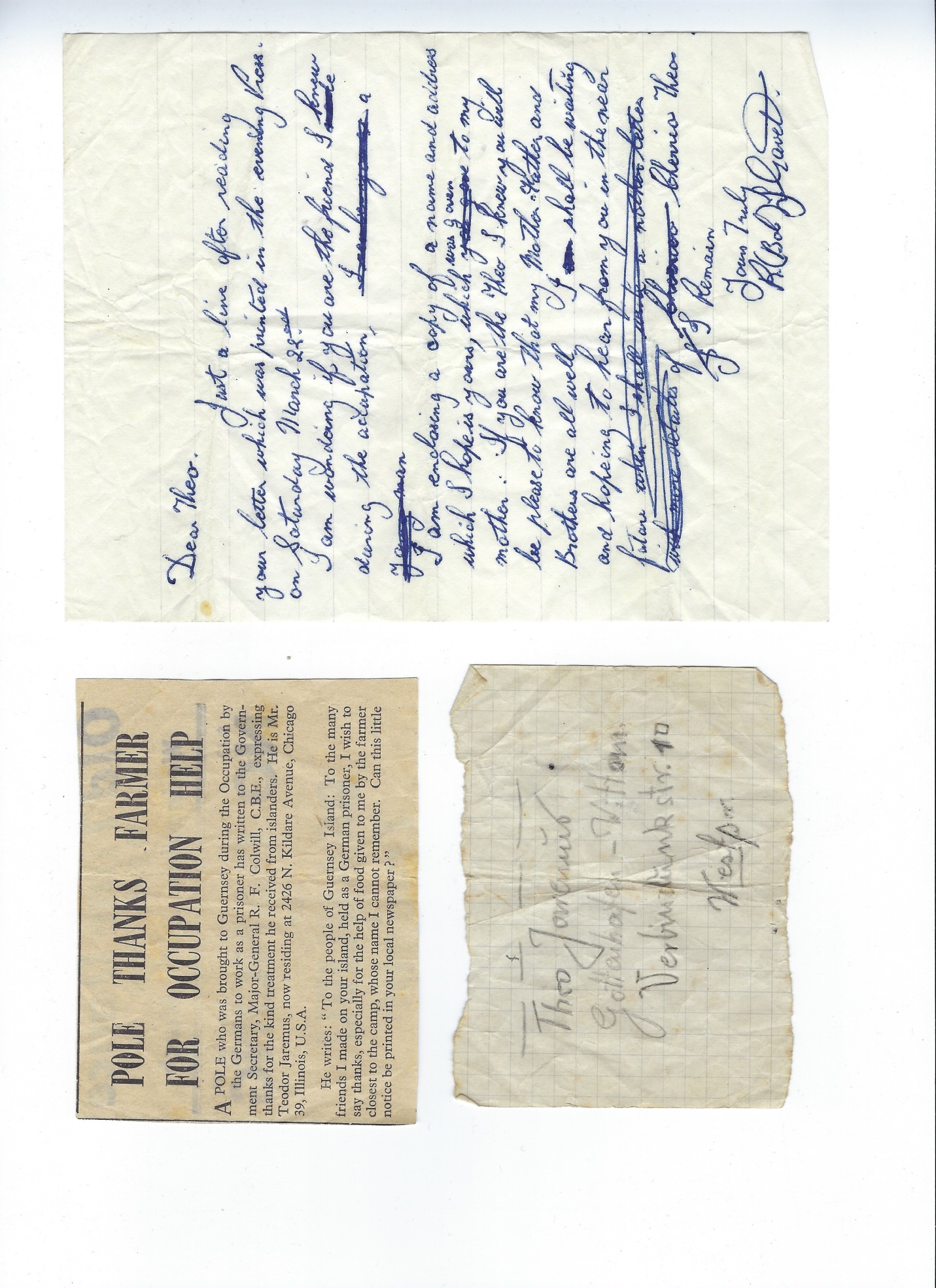
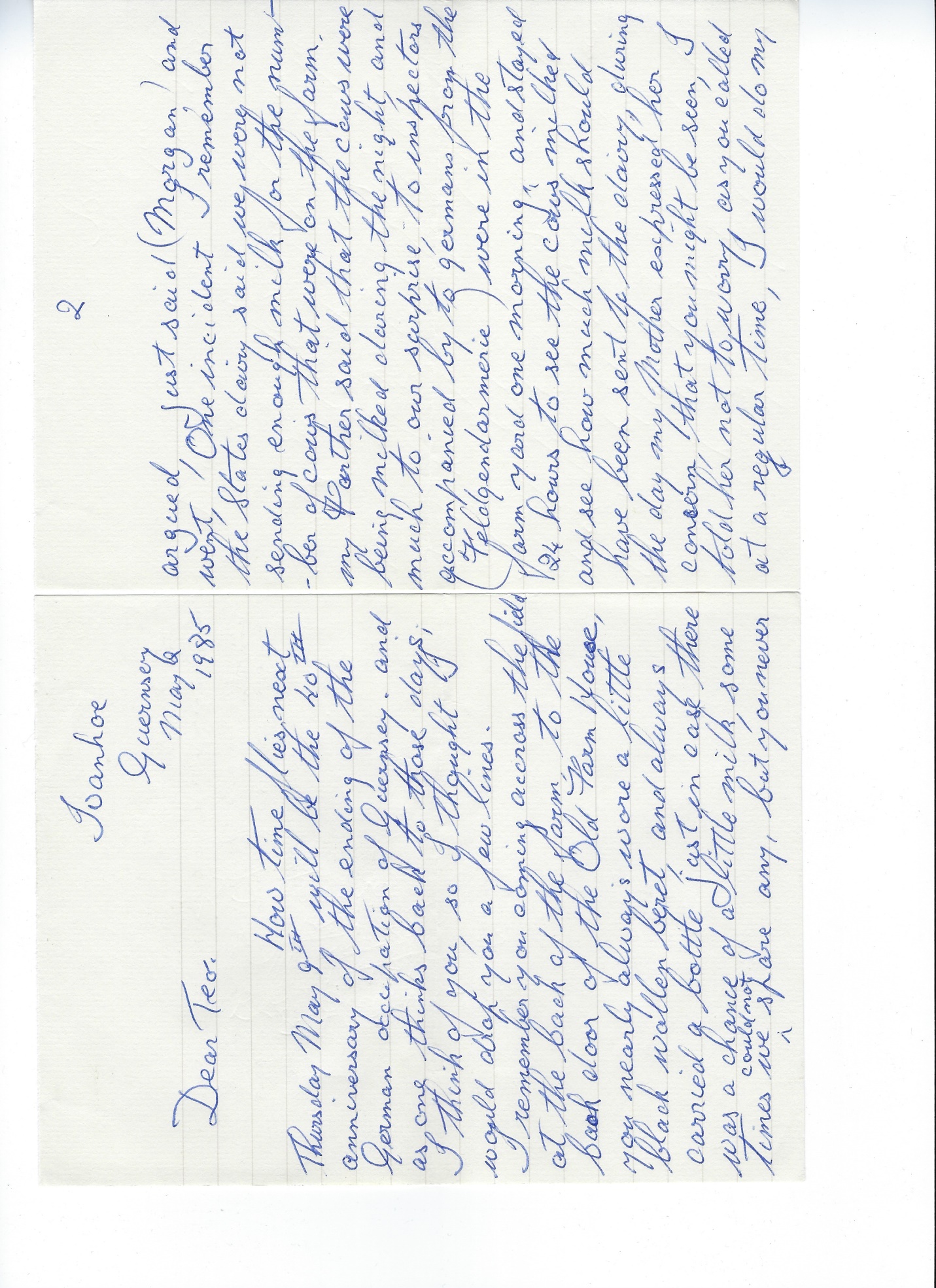
During Thanksgiving of 1990, 8
months after my mother passed away, my father Ted (his real name was Teodor)
asked me if I would write a Christmas letter to his old friend Bob Gavet. My
mother Eugenia, who was born in America and had a native grasp of English,
had been writing a yearly letter to Bob on behalf of my father, whose
writing skills were rather challenged. At that time, I had heard a little
bit about Bob Gavet and dad’s wartime experience. I had occasionally read
Bob Gavet’s holiday letter to Ted which dad often put on the coffee table in
the Morton Grove living room, but I really didn’t know very much. So before
agreeing to do anything I asked my dad for more information.
I knew that Ted had been a slave or forced laborer working
for the Nazi war machine. As a teenager, I had heard bits and pieces of his
story but I never understood how it fit together; where he went and when
things occurred, or very much about the Gavets. Then sometime around 1986 I
interviewed my dad to nail down his wartime experiences. So here’s a little
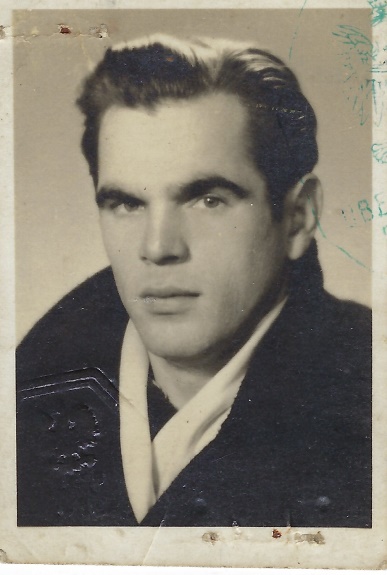
about that Ted Jaremus - 1947 time as it relates to his Guernsey
experiences.
When the Nazi’s invaded Poland in September of 1939, Ted was
a 16 year old boy. His mother tried to shelter him from service but the
Nazi’s eventually processed all able bodied men and though they tried to
escape, Ted was eventually "enlisted". Because he was born in Grifice,
Germany while his parents were working as migrant laborers, and since he
grew up in the new Polish port city of Gdynia he and other Poles from his
hometown were offered an opportunity to fight for the Nazis as "Volk-deutch".
Out of a group of 300 Poles, he and 6 of his friends refused to join.
Although Ted was beaten and humiliated at the recruitment event, these
refuseniks were the lucky ones. They were sent off to work as slave laborers
for the German war machine. Those Poles that agreed to fight for the Germans
were sent to the German-Russian front line and were never seen again.
Ted’s first assignment was working as a laborer on a nearby
Prussian farm. There he developed a reputation for being a hard worker.
Sometime around 1942 he was send by train through Germany to occupied France
and then shipped over to Guernsey, one of the English Channel Islands off
the coast of France. The British had evacuated the island as they had
decided early in the war not to defend the islands. Most of the citizens
were relocated to northern English towns, however a number of Guernsians,
refused to leave.
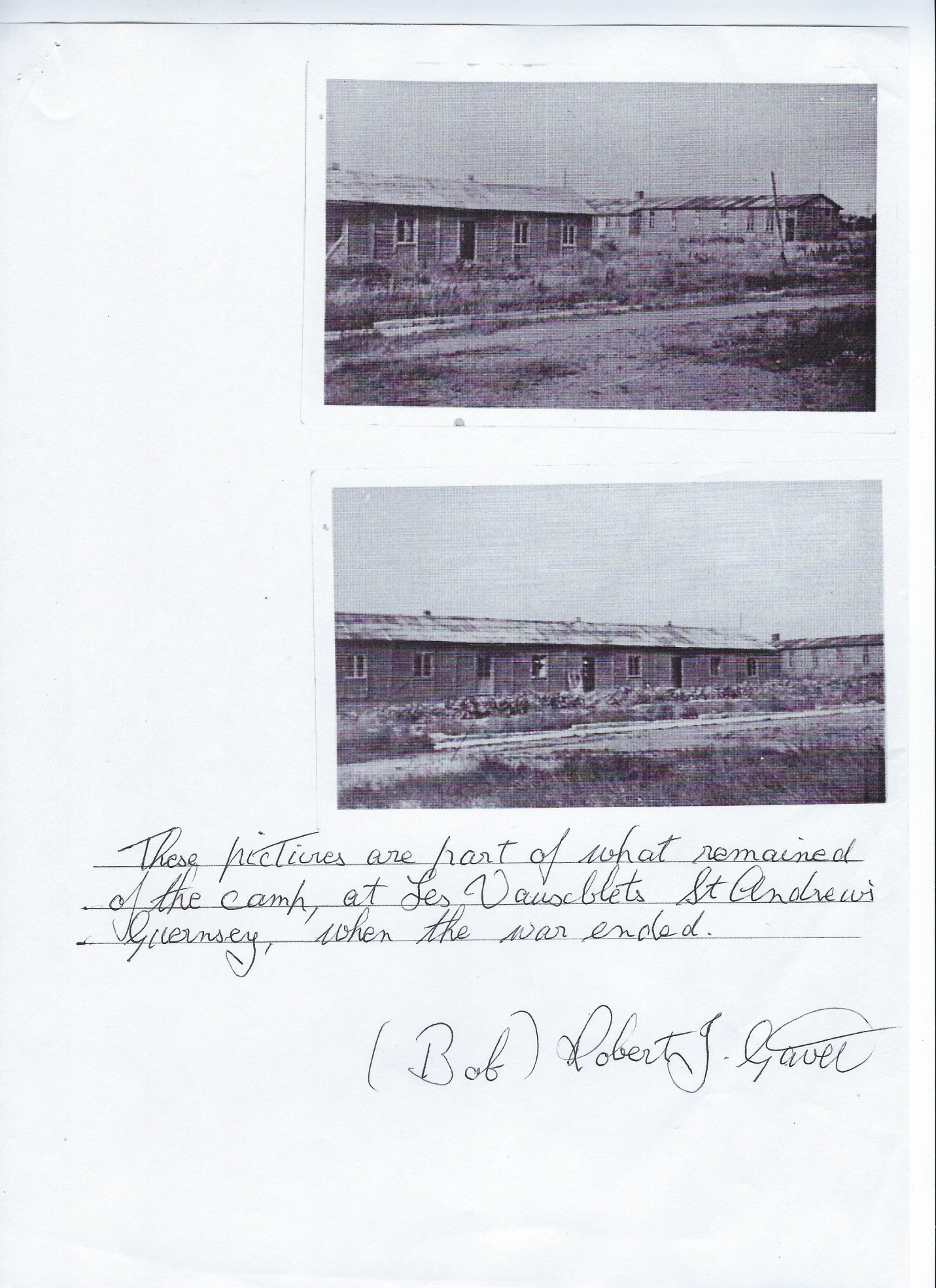
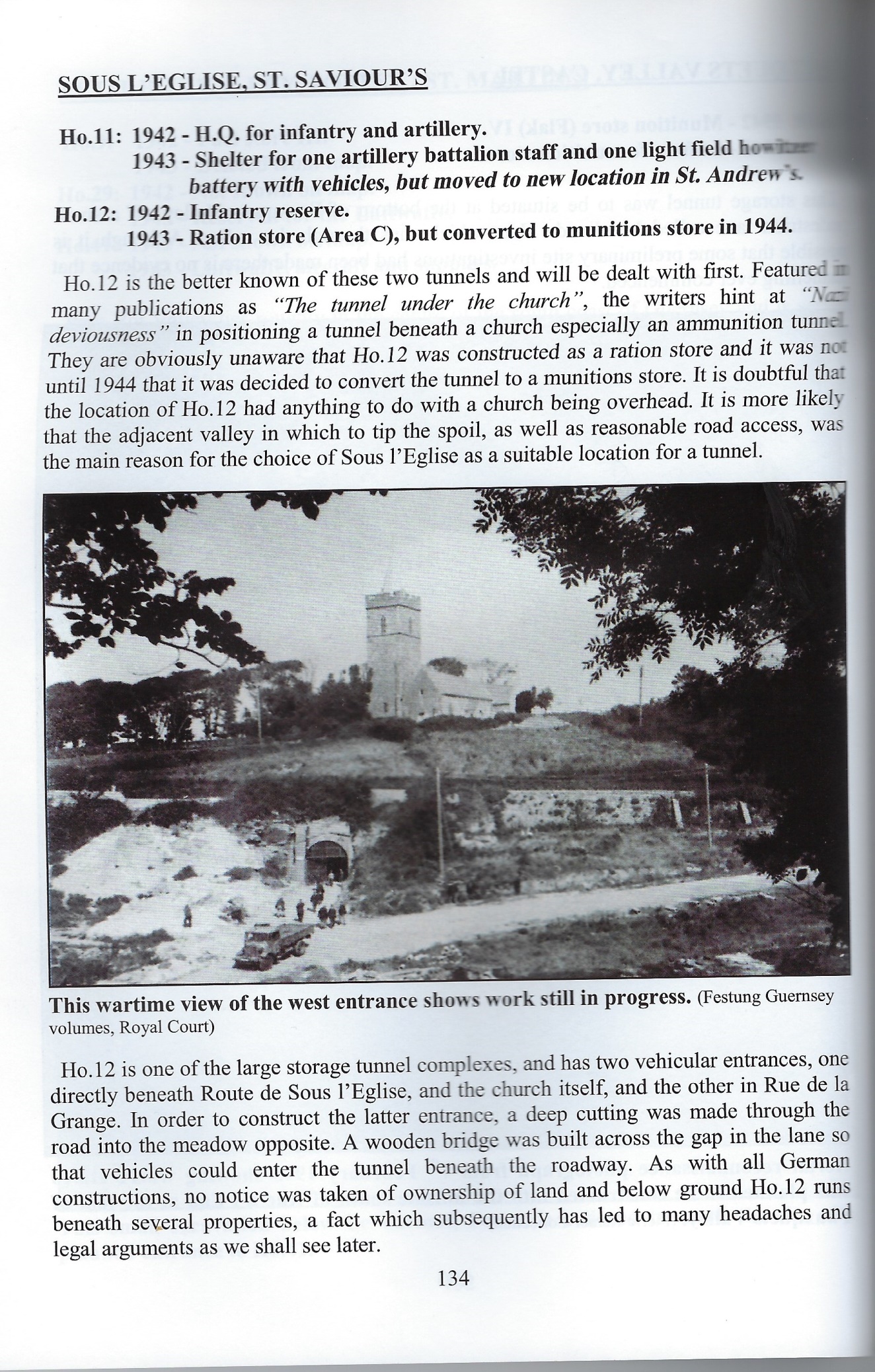
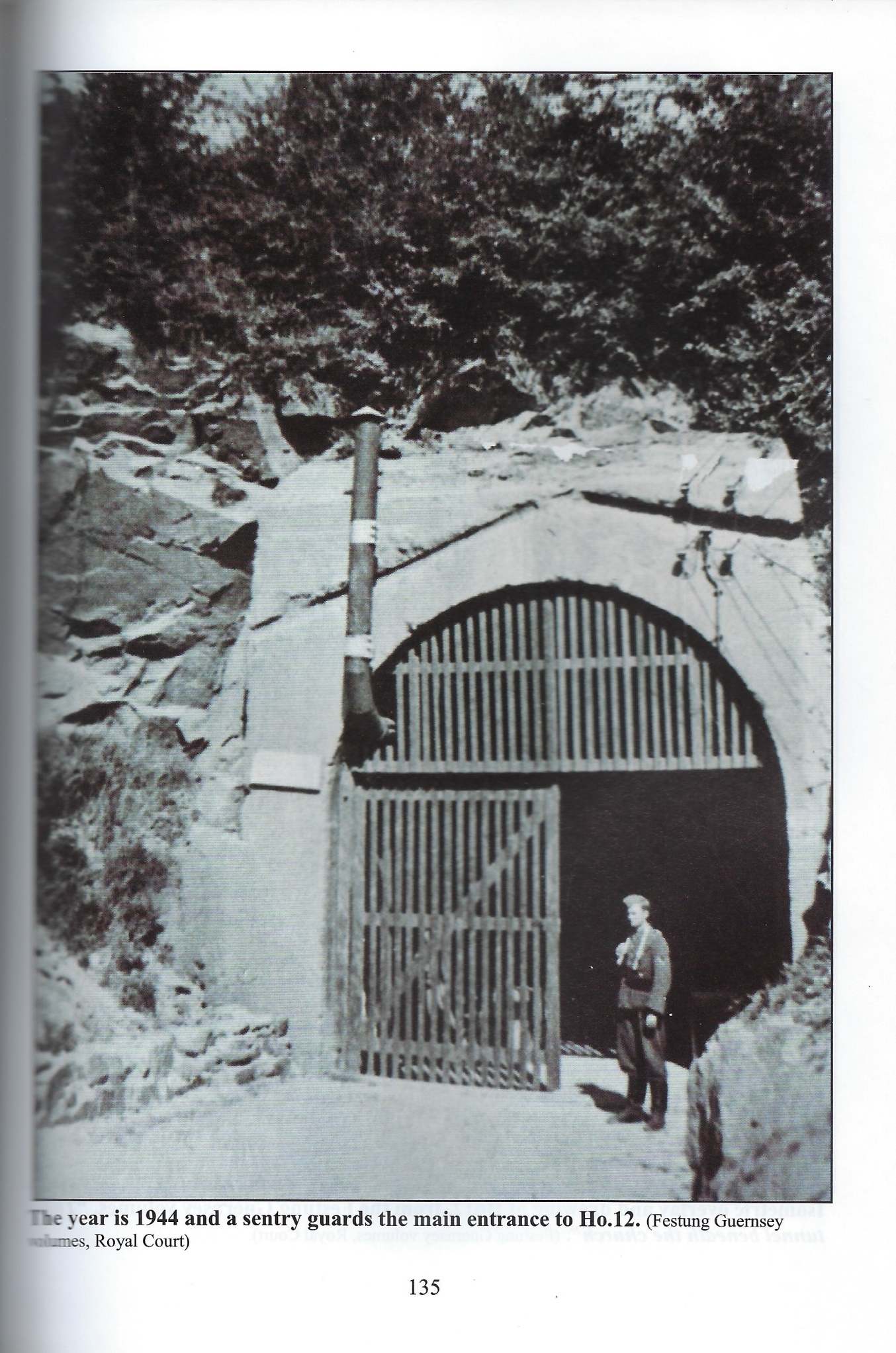
After the Nazi’s took over the Island, they decided to build
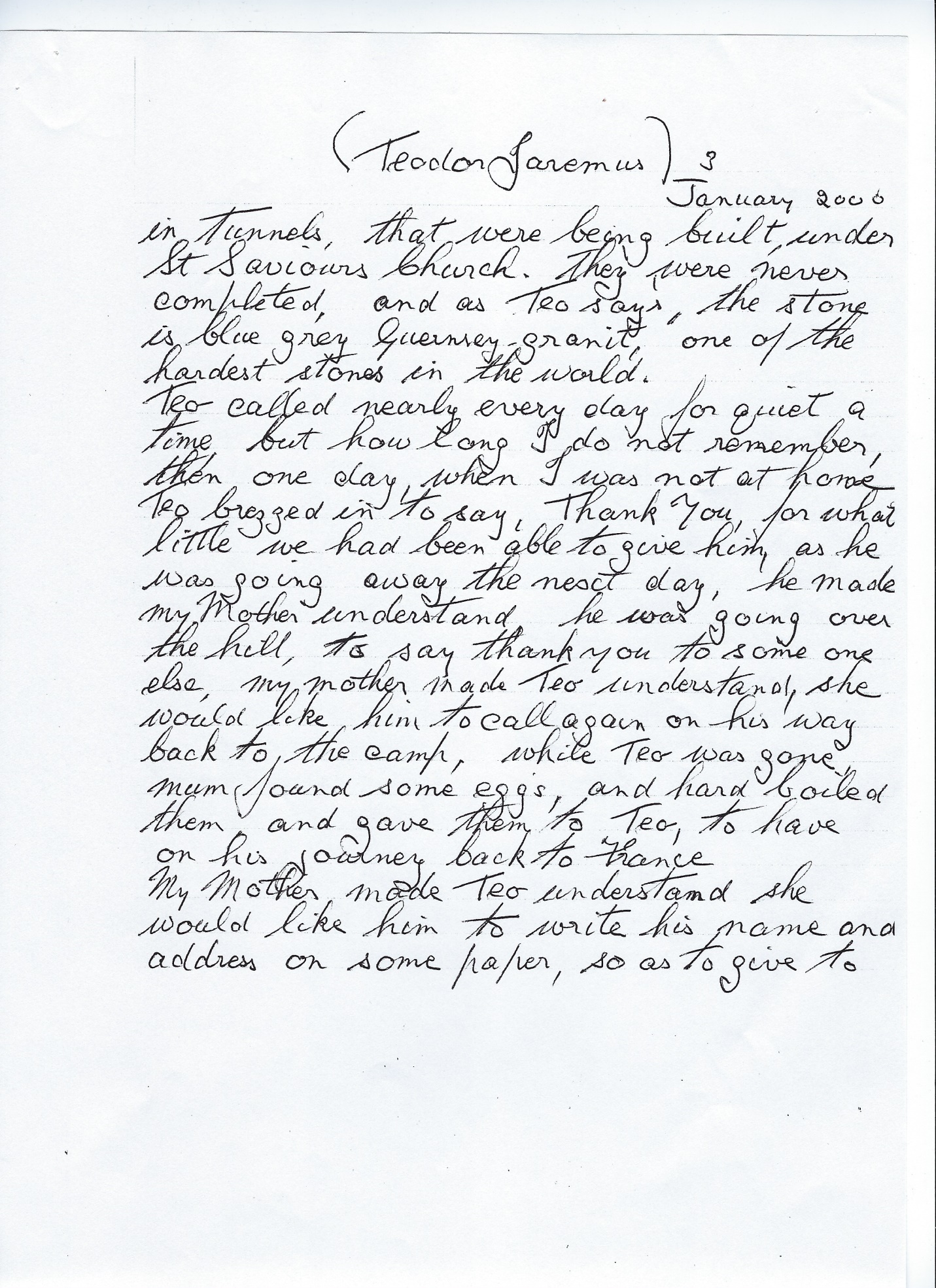
sea side concrete bunkers and an extensive series of underground tunnels.
They built these as underground supply depots and fortifications for what
they erroneously believed was a coming British invasion. Ted was one of many
Polish slave laborers and other skilled Axis craftsmen from the continent
that worked on this project. For the skilled Axis workers, this was a job
assignment and they were paid and treated like employees. For the slave
laborers, the reality was quite different. As my father explained, the
conditions were very harsh for the Poles (and other nationalities) and the
work was very hard. The granite rock that they were mining into was very
hard. Some days they only made a few inches of tunneling progress. Later the
Germans shipped over some diamond tipped grinding machines that allowed them
to make much better progress. The Poles, like Ted, were largely there to
remove the stone debris and do the back breaking manual labor work in the
tunnels. The conditions were harsh for the laborers. The food was basic and
of poor nutrition. Ted said he was constantly hungry. Many Poles died during
the work efforts.
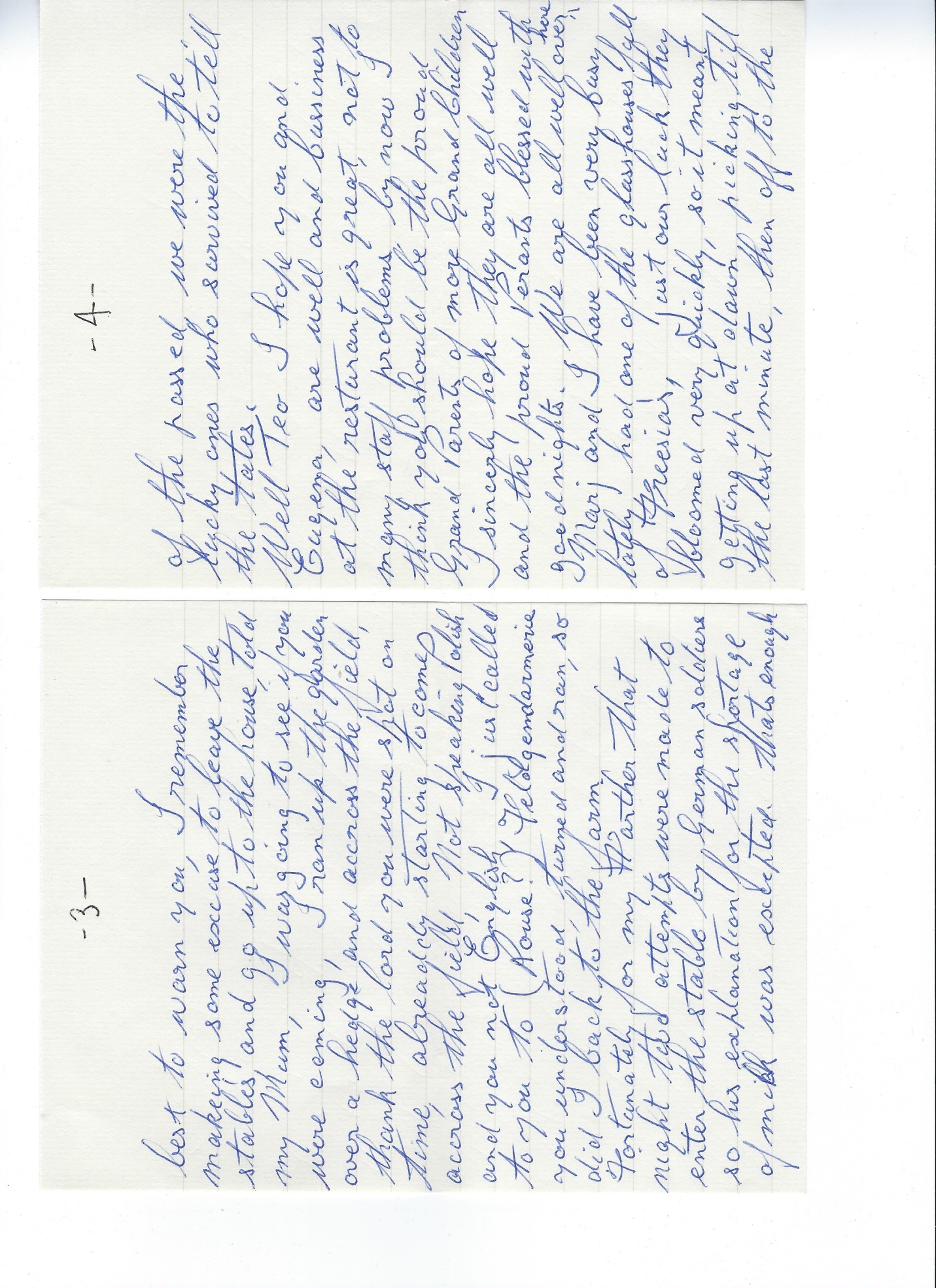
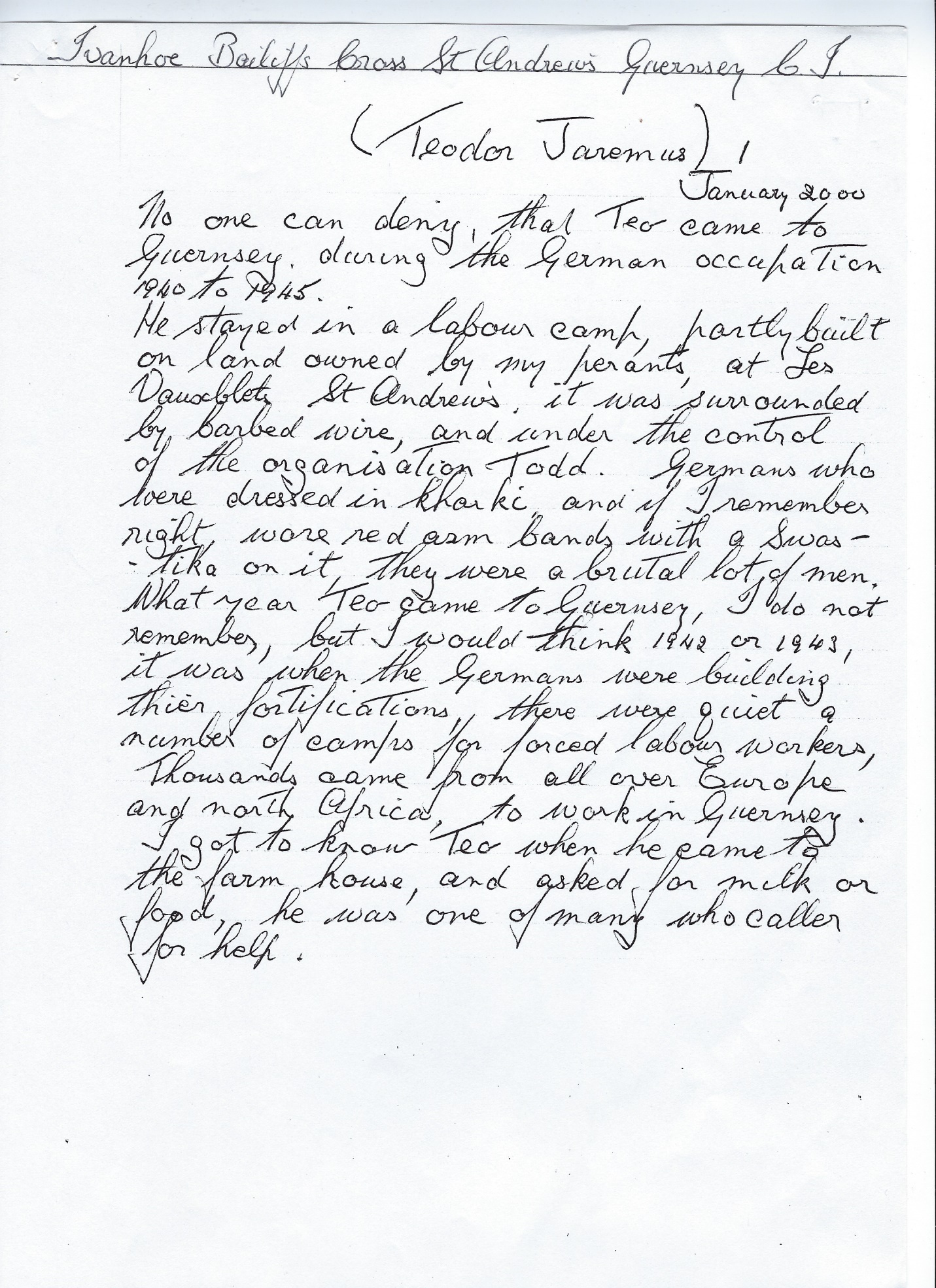
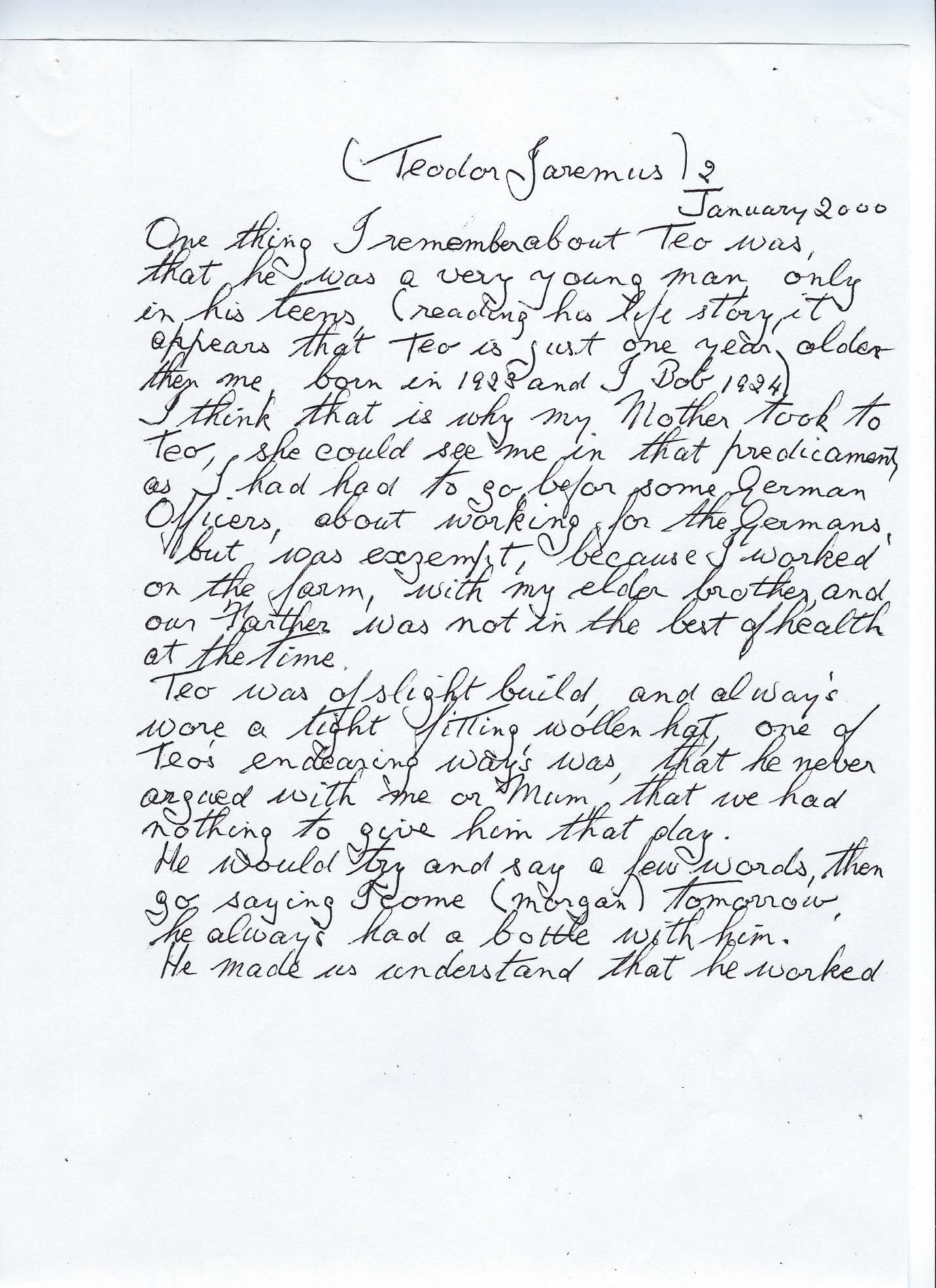
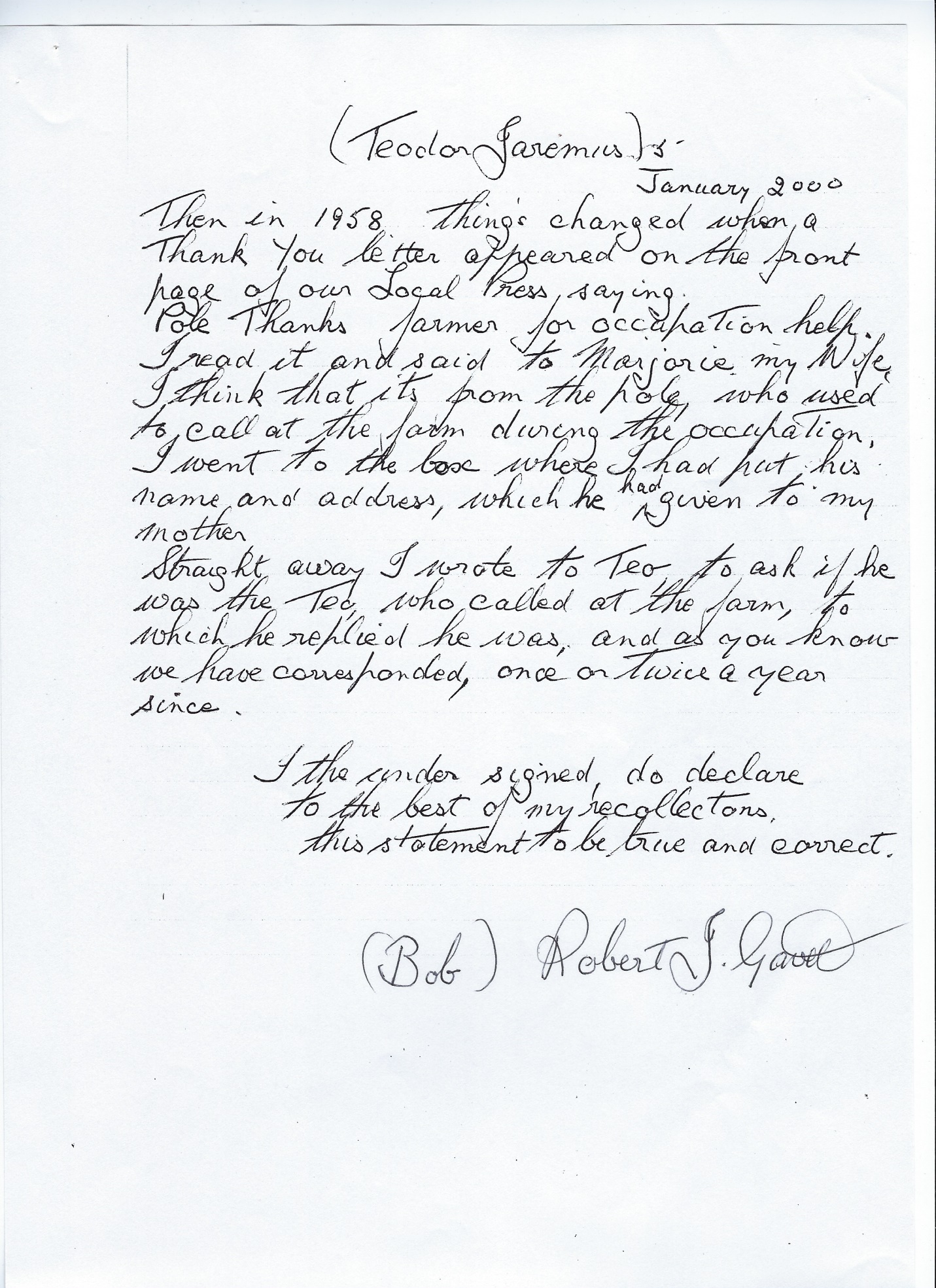
While going to work from the barracks, Ted walked along the
back side of a local farm where Ted slowly befriended a local farm boy Bob
Gavet. Ted didn’t know English and Bob didn’t know Polish but somehow they
managed to communicate. Bob’s mother took a liking to Ted as he was a
slight, young, polite man. She gave him some milk or food if they had some
to spare. Ted explained that his motivation was to get a fallen apple from
their apple tree, a piece of bread, or something else to eat as the rations
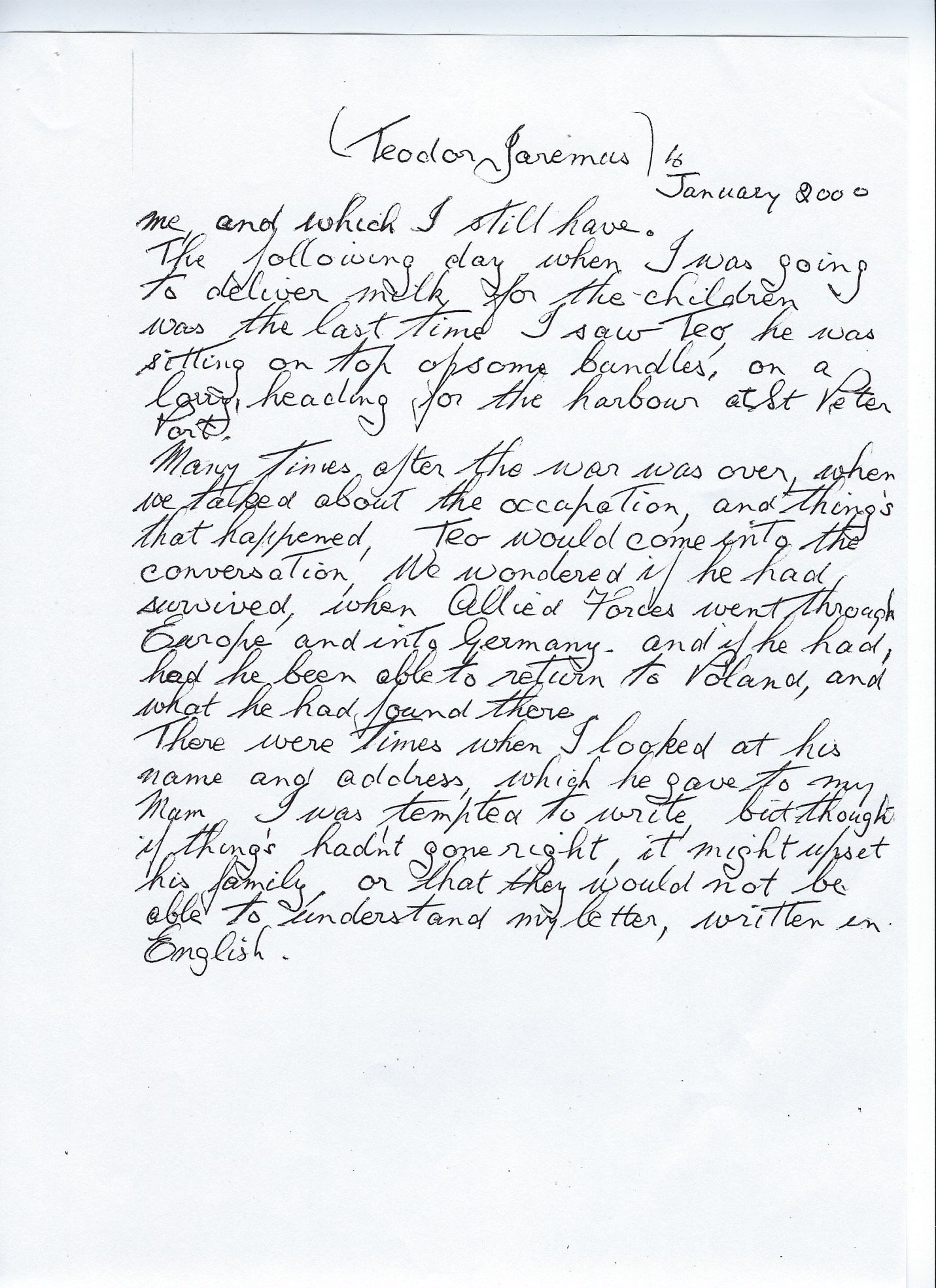
for the laborers was very meager. Bob and Bob’s mother stuck their necks out
for him and helped him survive those difficult days.
So back to Thanksgiving, 1990. With little knowledge about
the writing arrangements and a little knowledge about the Guernsey/Gavet
story, I said, "what do you want me to write?". I was thinking maybe dad
would dictate the contents of a letter and I would write for him. That
wasn’t to be the case. Rather, my dad said, "tell Bob what’s going on with
us". He gave me a letter that he had gotten from Bob. We talked a bit about
it, but I made no commitment. I was busy with work as I had recently started
a new job, so the letter writing effort languished for a while. When we got
together for Christmas later that year, dad asked again if I would write. So
after giving it a bit of thought, and asking him what he wanted me to say, I
wrote the first letter. I wrote it in Ted’s voice so to say, explaining what
happened to his wife and other things that had happened during the year. The
extended Jaremus family at the time all had young children, so there was a
lot of family stuff to write about. That was the beginning of my
correspondence with Bob.
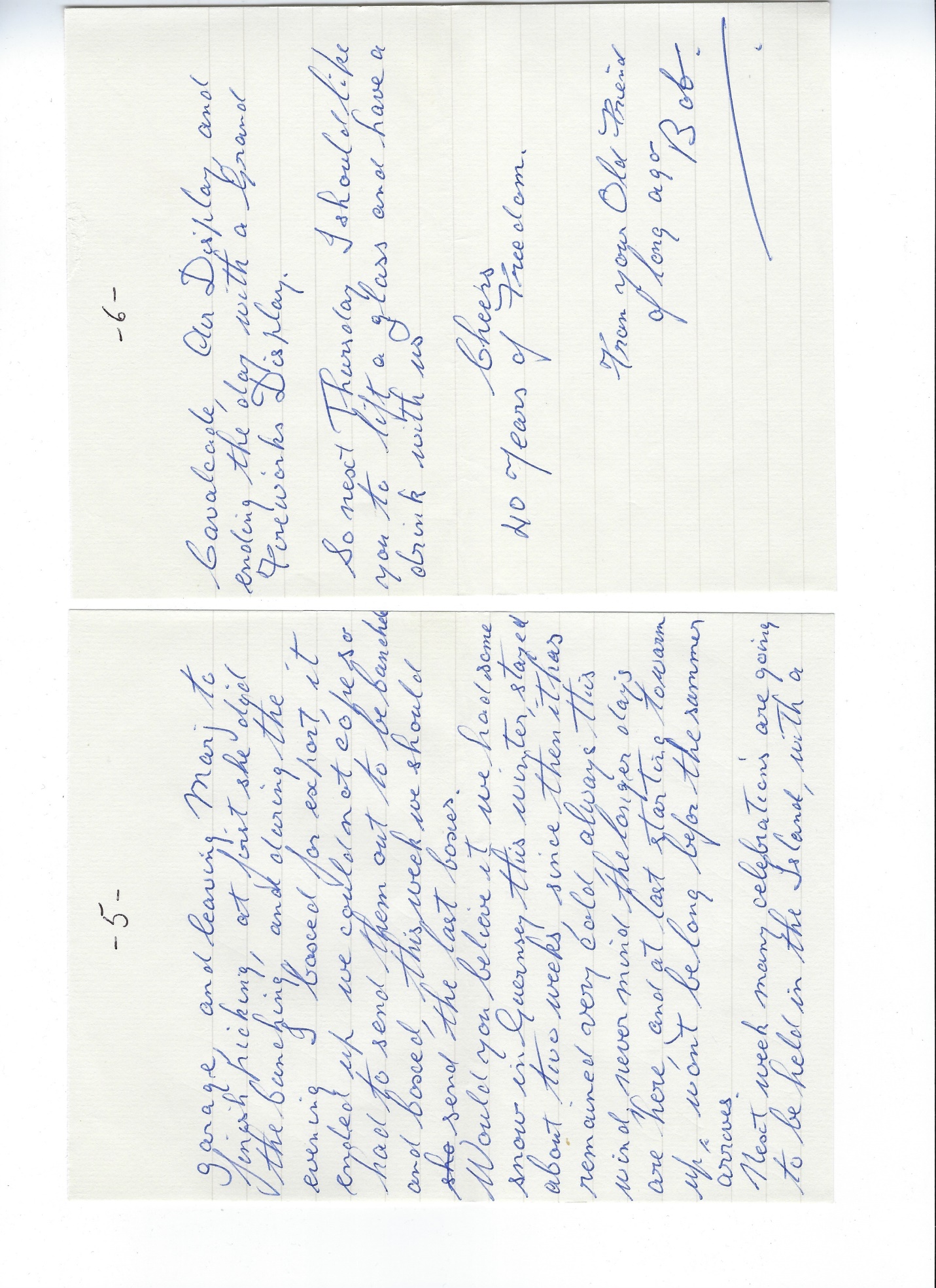
The following year dad got another letter from Bob. He had
read it and he gave it to me, and once again asked me to write to Bob for
him. I once again asked him what he wanted to say. He gave me a few thoughts
and his encouragement : "Just tell him what’s going on with the family". So
I was getting the idea about how this was going to work. I went ahead and
wrote another letter. As time went on, I took ownership of the writing duty.
I was beginning to find it interesting to correspond with Bob. He was a
good, gracious person that wrote in the British vernacular. He talked about
the old family farm, his brother who was still lived on the farm. Bob was
retired by then. He talked about his wife Marjorie, their grown children and
grandchildren.
As I came to understand, life on Guernsey after the war had
changed quite a bit. For a few decades after the war, Guernsey was still an
agrarian island. Most of the people were subsistence farmers, living quiet
unassuming lives away from the hustle and bustle of the British cities.
During the 70’s and 80’s, Guernsey became a hot house island growing
tomatoes, lettuce, peppers and other warm weather vegetables and flowers
that didn’t grow so well in England proper. While working for a local
garage, Bob invested and had built several hot houses and grew tomatoes and
flowers for export. But as time went on, European trade and transportation
methods improved, and when the oil embargo of 1974 hit with the soaring oil
prices, transportation costs increased dramatically. These kinds of
vegetables could be grown more easily in Holland or Italy and Spain and
transported by ship to England less expensively than from Guernsey where the
cool oceanic climate required greenhouse growing.
Then sometime in the 70’s or 80’s, the Channel Islands,
while part of the United Kingdom, but having independence from Britain –
became an off-shore banking destination. British people could park some of
their money in Guernsey or Jersey (a sister island) banks and not have to
pay the high taxes that were being charged in mainland England. As a result,
a large number of banks and financial institutions set up shop on the
island. Guernsey and Jersey became off shore financial centers. One of Bob
and Marjorie’s daughters worked at one of these banks. But the key thing was
that the island economy changed from being a self- sustaining largely
agricultural quiet outpost known for it’s Jersey cows, their cheese and
butter to becoming a tony financial haven. With the coming of more banks and
wealthy bankers, a new marina was built in the 80’s. Local hotels were
refurbished and built. The picturesque fishing town of St. Peters Port
became a desirable tourist destination.